Paju, Wetland near Yongwha Maul and Gongneungcheon river, 8 April 2021
Birds news from Dr. Bernhard Seliger (Hanns Seidel Foundation and Birds Korea lifetime member)
On the whole, a very frustrating morning in Paju – construction at Gongneungchong not only made the newly-bridged area completely devoid of bird, but also affected all rice fields around, which before had been used by waders, rooted out all the trees even far from the construction site, to make space on a dam otherwise used only by promenaders for large construction trucks constantly coming along the dam, led to the leveling of dozens of rice fields there and a level of noise making the strolling less than enjoyable.
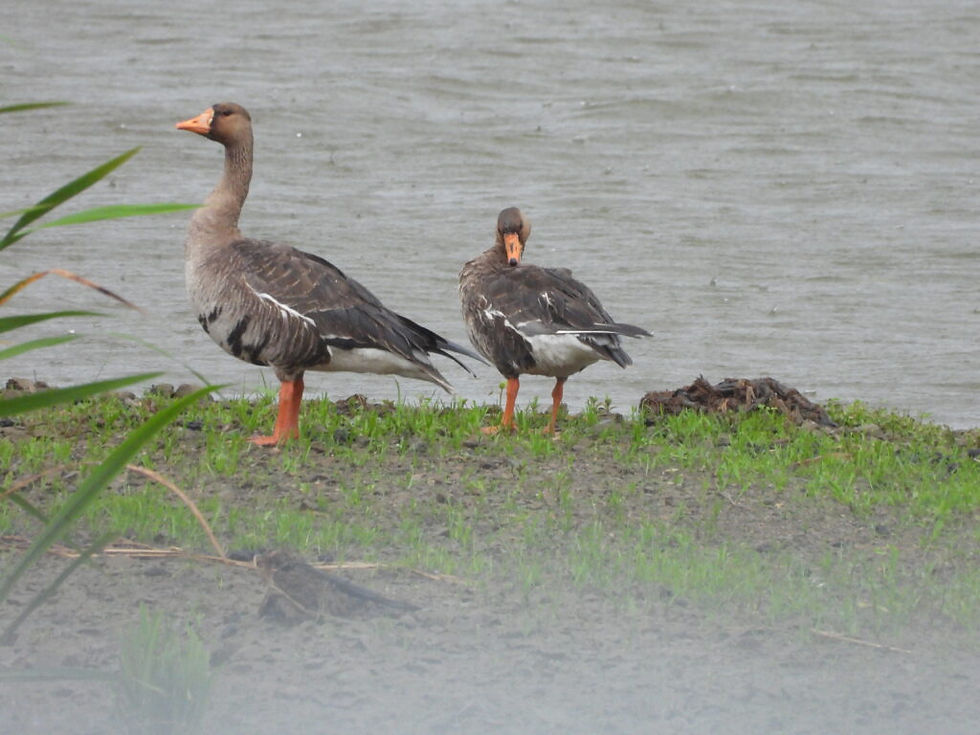
Highlight were 13 Common Snipes feeding at the small wetland near Paju Yongwha Maul, together with two Black-faced Spoonbills, and small numbers of other birds (Spot-billed ducks, teals, a single Olive-backed Pipit, White wagtails, a single Little Ringed Plover, a single Ruddy Shelduck). In the area around Gongneungchong (from the bridge in Odo-dong to Songcheon Bridge at Freedom Road) two Eurasian Spoonbills, a single Common Snipe, and a late flock of Greater White-Fronted Geese.
Another beautiful small stream massively deteriorated by construction. It would be less harmful, if after construction trees would be replanted, and biotopes created – but in fact, after the construction of the bridge, the construction of a road will follow, with many rice fields completely disappearing. If the area then still will be a habitat for the Black-faced Spoonbill, the Far Eastern Curlew and many other waders, bitterns, ducks, raptors, but also buntings and other small birds as in the past, is highly questionable.


The small wetland near Paju Yongwha Maul, a very important roosting area for many birds – more such places should be restored or newly created © Bernhard Seliger


Female Steijneger’s Stonechat Saxicola stejnegeri still in winter plumeage © Bernhard Seliger

Construction heavily impacted the whole area, among others, since bushes and trees important as cover and nesting places for birds were completely removed © Bernhard Seliger


“Eine Schwalbe macht noch keinen Sommer” (one swallow does not yet mean summer arrived), a German proverbe says…, but it was certainly nice to see this first Barn swallow Hirundo rustica © Bernhard Seliger


Comments